
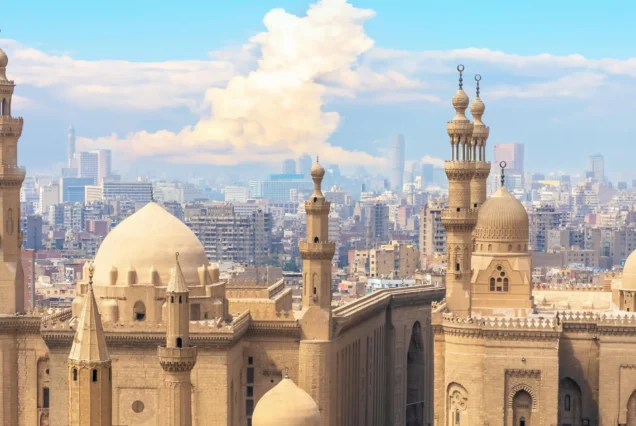
Sultan Hassan Madrasa and Al-Rifa'i Mosque, Cairo
Egypt: Cairo, 7-night Nile cruise, Luxor, Qena, Edfu, Kom Ombo, Aswan, Abu Simbel
Depart today on your overnight flight to Cairo, Egypt.
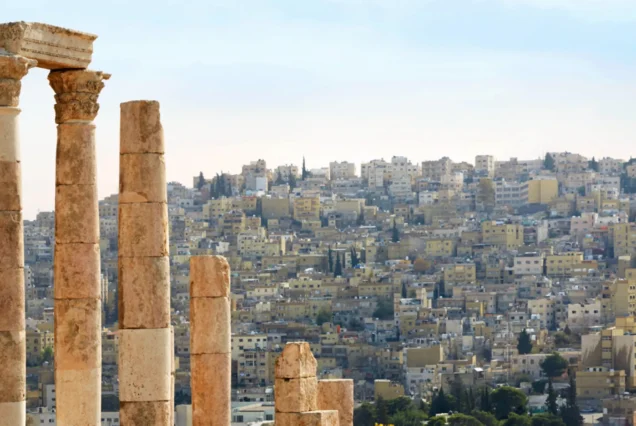
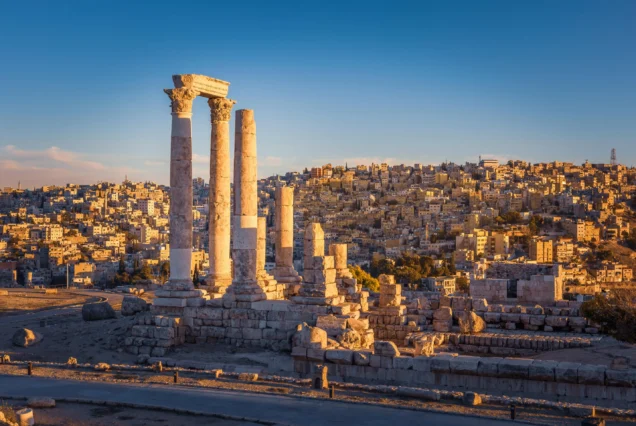
Afternoon: You'll arrive in Cairo this afternoon or evening. Meet your fellow travelers at the hotel, including those who took our Jordan: Amman, Petra & the Dead Sea pre-trip extension and those who arrived early in Cairo before the main adventure.
Dinner: On your own. Your Trip Experience Leader can recommend local dining options. Or you can venture to downtown Cairo on your own, perhaps to try a local favorite like koshari (a mix of rice, pasta, lentils, and tomato sauce).
Evening: Your evening is on your own.
Breakfast: At the hotel.
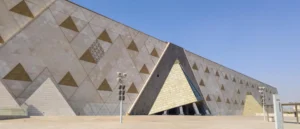
Morning: After a Welcome Briefing by your Trip Experience Leader, we'll drive outside Cairo to the Giza Plateau for a visit to the Grand Egyptian Museum. The museum’s collections are arranged chronologically, so you’ll feel as though you are walking through time. As we begin our tour together, our Trip Experience Leader will enhance our discoveries during a conversation about Ancient Egypt, describing how the earliest civilization took root on the banks of the Nile, tracing the division of dynasties during the Pharaonic era, and providing insights into the country's best-known kings and queens. Our tour will feature highlights of each historical period, including the spoils of Tutankhamun's father, King Akhenaten, and his wife Nefertiti.
Lunch: On your own at a restaurant in the Grand Egyptian Museum.
Afternoon: You'll have some time to explore the museum independently before we return to the hotel by mid-afternoon.
Dinner: This evening, we’ll enjoy a cocktail followed by a Welcome Dinner at a restaurant in our hotel.
Evening: You are free to retire to your room or gather at one of the hotel’s bars for a cocktail to go over the discoveries of the day.
Breakfast: At the hotel.
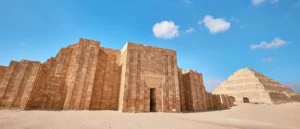
Morning: This morning we'll drive to Memphis and visit the Statue of Ramses II, an eleven-meter-high likeness of the third Pharaoh that was created 3,200 years ago. Then, we'll drive to Sakkara, a sprawling complex of temples, pyramids, and funerary monuments that was not explored by archaeologists until the mid-19th century, long after the Pyramids at Giza had been extensively cataloged.
Though its monuments span every period of Egyptian history, it is best known as the primary necropolis for the pharaohs and their families during the time of the Old Kingdom. The largest of these monuments is the Step Pyramid of King Zoser, built in the 27th century BC, possibly the first pyramid constructed in Egypt. More than 200 feet tall, it is the oldest stone structure of its size in the world. The tombs at this site house murals that provide insights into everyday life in ancient Egypt. Be sure to peer into the serdab, a stone structure in front of the pyramid with two eye-holes that invites you to look deeper inside. When you do, you will discover a remarkably life-like painted limestone statue of Zoser looking back at you.
Lunch: At a local restaurant.
Afternoon: After lunch, we'll return to our hotel and you'll have some free time to relax or pursue independent discoveries.
Dinner: This evening, we'll make our way to a local family's home for our Home-Hosted Dinner. All of the families we'll visit live in Cairo's upper-middle class and middle class suburbs. Your host family will offer unique insights into life in urban Egypt, from how local customs have changed in modern times, to the contemporary issues that plague Cairo (like the traffic we've encountered during our visit).
As you swap stories with your hosts and learn about their lives and culture, you'll also indulge in a hearty homemade meal consisting of traditional dishes. You might have a chance to try mahshi (squash or eggplant stuffed with rice) or Egyptian meat goulash. Be sure to save room for a pastry: konafa (a crispy cake filled with cheese) and atayef (dumplings filled with cheese or nuts) are both popular options. Keep your experience this evening in mind, as you may wish to compare it to your farm house visit in the coming days.
Evening: The remainder of the evening is free to do as you'd like.
Breakfast: At the hotel.
Morning: This morning we'll discover Fatimid Cairo, or Medieval Cairo, beginning with the Sultan Hassan Mosque. This mosque looms large—a grand structure that is widely held to be one of the best examples of early Mamluk architecture in Cairo. Constructed between 1356 and 1363 by Sultan Hassan, the site features a courtyard surrounded by four iwans (vaulted halls) and soaring minarets.
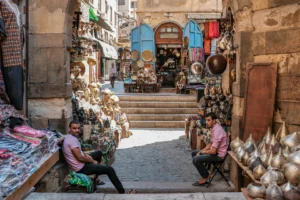
Directly facing the Saltan Hassan Mosque is massive Al-Rifa'i—one of Cairo’s largest mosques. It houses the tombs of many members of the Egyptian Royal Family, including Egypt’s last monarch, King Farouk—whose sister Fawzia was briefly married to the Sha of Iran, reigning as Queen of Iran from 1941 to 1948. We'll spend about an hour exploring the two mosques before heading over to Moez Street—one of the oldest streets in Egypt. Here, we’ll stroll past the ancient minarets, domes, and bazaars of this densely-packed neighborhood, which is always bustling with a mix of locals and visitors from around the world. This morning's tour concludes at the fabled Khan el-Khalili bazaar, a maze of narrow alleys teeming with shops of glittering gold, colorful silks, and exotic spices.
Lunch: At a local restaurant near Khan el-Khalili bazaar.
Afternoon: After lunch, we have the opportunity to wander through Khan el-Khalili bazaar. Perhaps you’ll practice your bargaining skills as you explore the colorful market stalls selling everything from fragrant roasted nuts, copper tea sets, and vibrant galabaya (traditional Egyptian tunic-style clothing), to costume jewelry and leather luggage sets. We’ll pause for a moment of quiet here at a café frequented by locals, where you can sample mint tea and even try smoking shisha from a water pipe, a favorite pastime of everyday Egyptians.
Later, we'll gather together and split into two groups of 35 and join one of two female speakers to discuss the Controversial Topic of the dilemma of wearing a hijab for Egyptian women. From ancient times to modern day, the role of women in Egyptian society has gradually evolved, and our conversation today will explore the extent of this evolution. We’ll glean insight from the personal experiences of either a working wife and mother or a single, working woman. The speakers grew up in Cairo, but their parents hail from rural villages—often leading to a cultural rift between the generations. As such, these women offer wide-ranging perspectives which are sure to cast a personal light on the delicate subject matter.
Egypt is divided on the push for this topic—the northern part of the country being progressive and the southern part less so. This contrast is, of course, most stark between rural and urban areas. There are different reasons why women choose to either put the hijab on or take it off, some of it are family, some are working conditions, some because of where you live and some for other reasons. We’ll talk more in-depth specifically about this groundbreaking decision later in our adventure.
Dinner: On your own. Your Trip Experience Leader can recommend any number of local dining options.
Evening: The remainder of the evening free to do as you'd like.
Breakfast: At the hotel.
Morning: Fly to Luxor this morning.
Lunch: Upon arrival in Luxor, a boxed lunch will be provided as we make our way to Karnak Temple.
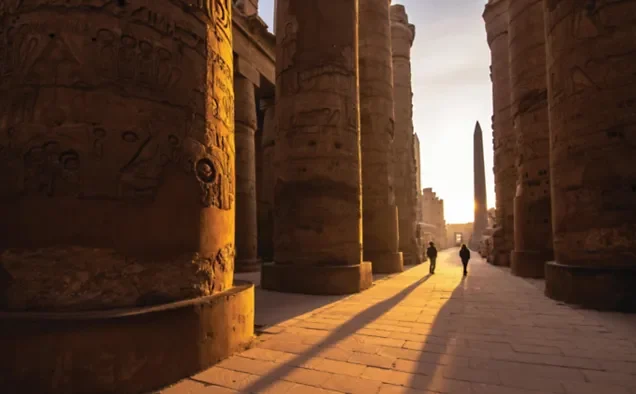
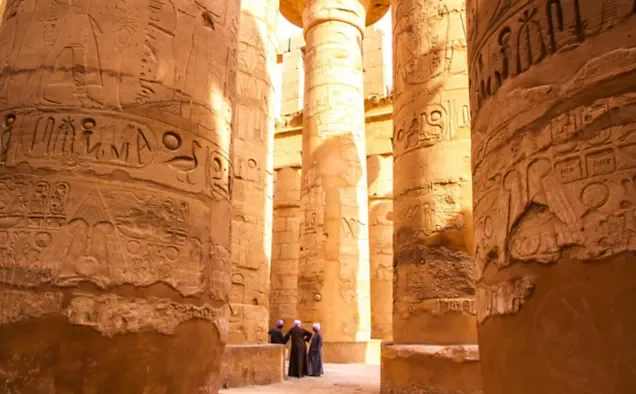
Afternoon: After lunch, we'll set off to explore Karnak Temple, the huge complex of shrines, built and enlarged over a period of 1,300 years. The ancient Egyptians called the enormous temple complex of Karnak “the most perfect of places,” and today it is one of the most important sites in Egypt as it encompasses a wealth of ancient Egyptian history, primarily between the Twelfth and Twentieth Dynasties. Construction began under Senusret I in the 19th century BC, and subsequent rulers continued to expand the complex with their own shrines, rooms, and monuments.
Your Trip Experience Leader will point out some of the temple's most noteworthy features as you explore together. Its centerpiece is the huge Hypostyle Hall, with its outer walls decorated with battle scenes. Walk through the soaring Hall of Pillars, and imagine how difficult it must have been to construct the 134 columns here without the use of modern machinery. You'll also see the tallest obelisk in Egypt—97 feet tall and weighing approximately 320 tons—which was raised by Queen Hatshepsut in honor of the god Amun. You'll also have the opportunity to seek out your own discoveries. Be sure to take a close look at the walls—most are covered in hieroglyphics that seem as deep and pronounced today as they might've been when they were first carved 3,000 years ago.
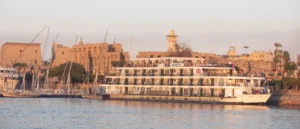
After our visit, we'll transfer to the dock where our privately chartered small ship awaits us. For the next seven nights, the 75-passenger Nefertiti will carry us from one iconic site to the next and give us an intimate look at life along the Nile River. Travel this storied waterway as many have over the centuries—from Cleopatra to Agatha Christie—and trace the routes of legendary pharaohs who built their empires along the Nile. As we sail, relax on your private balcony—a feature not often found on other Nile River ships—and keep an eye out for traditional felucca boats gliding in the water alongside us, while simple stone homes cozy up to the riverbanks.
Later, gather with your fellow travelers in the lounge for a Welcome Briefing and the first of a series of nightly Port Talks. These informative conversations, led by your Trip Experience Leader, will give you an overview of the following day’s itinerary and prepare you for the destination ahead. Shortly afterwards, enjoy a Welcome Cocktail and meet the crew before dinner.
Dinner: Gather for a Welcome Dinner onboard in the ship’s dining room. In addition to the standard dinner options (appetizer, soup, entrée, and dessert), we’ll enjoy a few more special offerings at this celebratory meal. We'll also meet the Rayes (chief) of our ship. As a native of Upper Egypt, the Rayes will likely be wearing a traditional galabeya (floor-length tunic) throughout our voyage. But there's no need for you to match his formal style: The dress code for dinners onboard is smart casual. However, some travelers choose to wear a day dress or slacks to the Welcome Dinner.
Evening: We are docked in Luxor for the evening; you have the freedom to explore the city as you wish.
Activity Note: As it did for the ancient Egyptians, high water makes for a smoother sail. As such, from mid-November to mid-February, when tides are low, your ship will stay in Luxor for the evening. Travelers who opt to take our hot-air balloon excursion should be prepared to awake very early in the morning. Also, please be aware that limitations on how many ships per hour can pass through the Esna locks could affect the order in which you visit sites during your cruise.
Early Morning: As the sun rises over Luxor, so can you—aboard an optional hot-air balloon ride (weather permitting). The sights, sounds, and sheer spectacle of seeing these antiquities from the sky will surely make for a memorable morning.
Breakfast: Aboard our ship.
Morning: Today, we’ll enjoy our A Day in the Life experience with a local family on the west bank of the Nile River. The east bank, where our ship is currently docked, is Luxor like you’ve always imagined: home to bustling markets, the elegant Old Winter Palace Hotel, and the grand Luxor Temple. The other side of the Nile, however, seems like a different world entirely. Rural, reedy, and less developed, the west bank is home to villagers who are far removed from the Hollywood-ready attractions just across the water. Most of the houses here are modest, made from mud bricks or concrete and surrounded by date-palm and henna trees.
We’ll board a motorboat bound for El Ramla or one of the other villages on the west bank. Upon arrival, we’ll set off on a walking tour of the village, while learning about everyday life in this close-knit community from a villager and local leader whose family has lived on the west bank since the 1960s. Then, we’ll venture deeper into the village for the opportunity to participate in some hands-on activities. The weather and soil here are favorable for growing a large variety of crops—from potatoes and eggplants to mangoes and tomatoes. Depending on the season, we may have to opportunity to harvest some of the produce or spread seeds for a new crop.
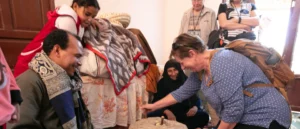
Then, we'll sit down with members of the family and spend some time discussing their lives, struggles, taboos, and traditions. If your host is female, you might want to ask her about women’s role in a typical Egyptian family, comparing her experience with what we learned about women's rights earlier in our adventure. If children are home, perhaps you’ll ask them what school is like. Arranged marriage is common in Egypt; if a married couple is present, you might ask their opinions of the practice.
We might also help feed the animals or use the old millstone to grind wheat into flour. Sun bread (flatbread similar to pita) is a staple of the local diet, and every family in the community either has a stone oven of their own, or has access to a shared oven. We’ll help prepare a batch of this whole wheat treat, which will accompany our lunch.
Lunch: We’ll gather around the table to enjoy a meal with the family. In addition to the bread, we’ll enjoy an assortment of seasonal, homemade dishes typical of this region. Our lunch concludes—as most Egyptian meals do—with a cup of either black or hibiscus tea. While it may seem counter-intuitive to drink a warm beverage in a hot climate, Egyptians know that it actually tricks the body into cooling off.
Afternoon: We’ll bid farewell to the family and walk to the Nile’s bank, where we’ll encounter a local icon: a felucca. These traditional wooden-hulled boats with lateen (triangular) sails ply the water in profusion here. They’re the ideal vessel to take us back to our ship on the east bank. Our leisurely crossing will allow us to take in the views of both sides of the Nile and reflect on the power of this ancient, life-giving river.
We’ll re-board our river ship and set sail to Qena. Following a safety briefing aboard ship, our groups will engage in an enlightening conversation on hieroglyphics with your Trip Experience Leader before dinner.
Dinner: Onboard in the ship’s dining room.
Evening: You have the freedom to spend the rest of your evening as you wish. Perhaps you’ll enjoy a nightcap at the bar or relax in the lounge.
Activity Note: During low-water season, from mid-November to mid-February, you will travel from Luxor to the Dendera Temple complex via bus.
Breakfast: Onboard our ship.
Morning: Early this morning, we will awake in Qena—a docking destination few other travel companies offer. Situated north of Luxor, Qena sits at a bend in the Nile, and is ideally positioned at the intersection of two main roads. Both a market town and a provincial city, Qena is also the perfect base for visiting the nearby Temple of Dendera.
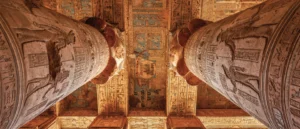
We'll disembark to visit the colorful Temple of Dendera, built by Romans and Greeks and dedicated to Hathor—goddess of maternal and family love. This well-preserved temple complex contains birth houses, a Coptic church, the Hathor Temple, and Hypostyle Hall. One of the celebrated features of the temple is an astronomical ceiling intricately decorated with vultures, winged disks, and the union between Hathor and Horus. Paintings on the ceiling—which are some of the most well-preserved in the ancient world—also represent the two halves of the sky with its northern and southern constellations, the hours of day and night, the sun and moon, and the symbols of the zodiac.
After returning to our ship , the Nefertiti will begin cruising back to Luxor.
Lunch: Onboard in the ship’s dining room.
Afternoon: Enjoy some time at leisure as we continue making our way to Luxor this afternoon. Sit out on your private balcony and drink in the passing vistas of everyday life along the banks of the Nile River. Perhaps you will witness a farmer leading his cattle to graze in the fields, or local women bringing their brightly-colored laundry to the banks for washing. Later, you may also choose to take part in an onboard cooking lesson with our ship's chef to learn how to prepare a local specialty.
Upon arrival in Luxor, we'll disembark and make our way to Luxor Temple. Rising from the east bank of the Nile, this sprawling ancient complex was a center of power for Egypt’s mighty pharaohs over a nearly 1,500-year period. The temple complex was largely built by Amenhotep III and Ramses II, the most celebrated pharaoh of the New Kingdom (his reign lasted some 66 years, up until his death at age 91). Many other pharaohs and rulers added to the temple over the centuries. Tutankhamen even contributed—the only mark left by the boy king.
Dinner: Onboard in the ship’s dining room.
Evening: A belly dancer will come aboard this evening to perform. While practiced throughout the Middle East today, this art form was actually created by Egyptian ghawazee (traveling dancers) in the 18th century. Its flowy costumes, clinking castanets, and deliberate movements proved very popular, and it quickly attracted fans from around the world.
Breakfast: Onboard our ship.
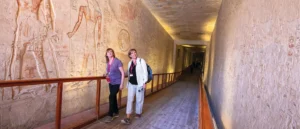
Morning: This morning, we'll visit the west bank of the Nile, the hilly area that was once the Necropolis of Thebes. It's here that we'll visit the Valley of the Kings, with its many tombs chiseled deep into the cliff sides. Several great leaders, as well as many less important rulers, are buried here, and more tombs are being discovered even today. This is where Howard Carter discovered the treasures of Tutankhamun in 1922, which we will have the opportunity to discover for ourselves. Each tomb is long and narrow, has the king's formal name and title inscribed in it, and each is decorated with his images and statues. Because these tombs were long sealed from the elements, their walls have retained the vibrant colors and deeply chiseled details that were added by the original builders thousands of years ago.
We'll explore a few of these tombs together with our Trip Experience Leader, and also have time to visit others independently before heading over to the nearby Temple of Queen Hatshepsut, the monument of one of Egypt’s greatest rulers, and one of its only female pharaohs. As we leave the fabled valley, we'll stop at the pair of massive statues of Amenhophis, known as the Colossi of Memnon. These statues are the only remnant of a temple dedicated to Amenhotep III—later, the Greeks determined that the statues represented their hero, Memnon.
Lunch: Onboard in the ship’s dining room.
Afternoon: After lunch, the afternoon is at your leisure. Our vessel will pass south through the locks of Esna early this evening.
Dinner: Onboard in the ship’s dining room.
Evening: Enjoy onboard entertainment tonight before you settle in for the evening.
Breakfast: Onboard our ship.
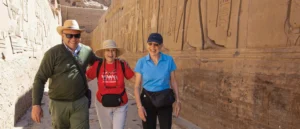
Morning: We set sail for Edfu early this morning, arriving shortly after breakfast. Then, we'll disembark and drive to Edfu's Temple of Horus. Dedicated to Horus, the god of the sun and planets, the falcon (Horus's symbol) is prominent in the vivid hieroglyphs and bas-reliefs of the temple. Thirty-eight columns surround the court, and a fine statue of Horus stands guard over the entry. Every available surface is carved with hieroglyphs describing offerings to the god.
We'll head back to our ship and then sail to our next destination—Kom Ombo.
Lunch: Onboard in the ship’s dining room.
Afternoon: This afternoon, we'll visit the Temple of Kom Ombo. Set on a hill overlooking a bend in the river, the Greco-Roman style temple of Kom Ombo (actually two temples) is unique, as it is Egypt's only double temple dedicated to two deities instead of one—Sobek, the crocodile god, and Horus, the great, winged falcon god. Everything here is doubled and perfectly symmetrical along a central axis—twin entrances, twin courts, and twin colonnades.
Dinner: Enjoy an Egyptian dinner buffet onboard ship featuring traditional Egyptian fare—perhaps including koshari, a lentil, rice, and pasta dish; shawarma, thinly sliced meat roasted on a spit; or umm ali, bread pudding with pistachios.
Evening: After dinner, take part in a galabeya dress party, where you'll have the opportunity to try on one of the traditional embellished robes.
Breakfast: Onboard our ship.
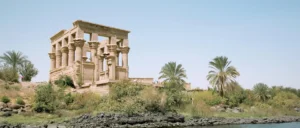
Morning: Upon arrival in Aswan, we'll set off to visit Philae Temple, which is dedicated to Isis, an enchantress known as the giver of life, the protector of kings, and the mother of god.
Originally located along the Upper Nile, Philae Temple was relocated downstream to Agilika Island in 1970 to protect it from the flooding caused by the construction of the Aswan Low Dam. The temple complex dates from the 26th Dynasty, with additions through the Roman period. It was one of the last temples built in the classical Egyptian style, as well as one of the last tributes to a goddess. Pilgrims would come from all over the Mediterranean to worship Isis here. This temple's towering silhouette has left a lasting impression on visitors for centuries, and its unique architecture makes for a fascinating journey through its jigsaw-like halls.
Lunch: Onboard in the ship’s dining room.
Afternoon: The remainder of the afternoon is yours to relax onboard.
Dinner: Onboard in the ship’s dining room.
Evening: Enjoy the evening as you wish.
Activity Note: Today features a long drive and a very early wake-up. Our drive to these temples will take about 4 hours along some bumpy roads. After spending 4 hours exploring Abu Simbel and enjoying lunch, we will return to Aswan, a journey of another 4 hours.
If you would like a more relaxed day, you may choose to remain in Aswan and explore on your own. Perhaps you'll opt for a felucca ride around the botanical island, or delve into Nubian culture at the Nubian Museum.
Breakfast: Onboard our ship.
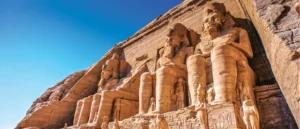
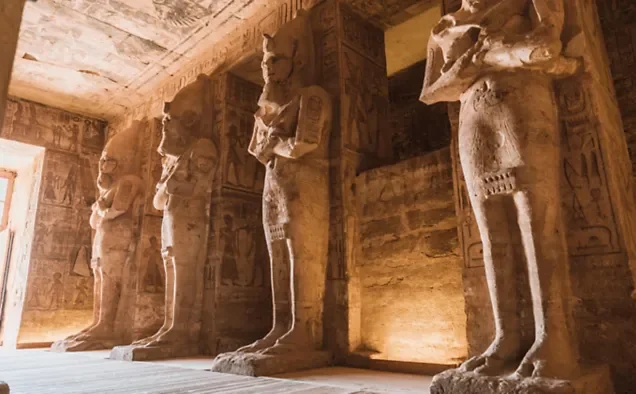
Morning: Enjoy a full-day excursion to Abu Simbel. Along the way, our Trip Experience Leader will shed light on Egypt's Nubian people. An indigenous group of African descent, Nubians have long maintained a language and culture distinct from those of their Arab neighbors. With the construction of the Aswan High and Low Dams, thousands of Nubian people and monuments—including Abu Simbel—were displaced by flooding. Upon arrival, we'll explore the two temples built by Egypt's great Pharaoh Ramses II (Egypt's longest-ruling king) as a tribute to the deities and his favorite wife Nefertari. Originally carved into a mountainside, the temples feature richly detailed stone monuments—including four 65-foot tall statues that flank the entrance to the Great Temple. Unlike other Egyptian temples, which typically feature a linear structure, Abu Simbel's design includes myriad side chambers. The whole interior is packed with bas-reliefs depicting battle scenes, as well as pillars and monuments to the gods.
In an epic feat of modern engineering, the massive temples of Abu Simbel were moved to their present location when construction of the Aswan High Dam in 1960 created Lake Nasser and flooded their original location. This extraordinary operation to save one of the world's greatest treasures took years, and the efforts of an international team of engineers and archaeologists. The temple is now backed by an artificial mountain built to resemble its original setting.
Lunch: At a restaurant in Abu Simbel.
Afternoon: After lunch, we'll return to Aswan, where you'll have time to refresh before dinner.
Dinner: Join your fellow travelers for a Farewell Cocktail followed by a Farewell Dinner as we prepare to say goodbye to our ship and crew.
Evening: Enjoy a live Nubian show, which will acquaint us with the traditions of this indigenous group. The highlight is the tanura dancer, whose brightly colored, multi-tiered skirts rise higher and higher as she spins to the increasingly intense beat of drums.
Breakfast: Onboard our ship.
Morning: Disembark the ship this morning and fly to Cairo. On our way to the airport, we'll stop at the Aswan High Dam, which was built in 1960. The dam forever changed the agricultural rhythms of Egypt. Once subject to devastating Nile floods, Egyptian farmers looked to the Aswan High Dam as a way of improving their ability to control their crops. However the large reservoir it created displaced nearly 10,000 of the indigenous Nubian people who lived in the region and created Egypt's own lost city of Atlantis, as the waters swallowed up both homes and priceless archaeological ruins.
Lunch: On your own shortly after arriving at our Cairo hotel—ask your Trip Experience Leader for local restaurant recommendations.
Afternoon: The balance of the afternoon is yours to delve even deeper into the city’s treasures. Perhaps after exploring the various ancient sites from your Nile cruise, you'll feel inspired to return to the Egyptian Museum for a fresh perspective of the artifacts you've seen and discover ones you may have missed the first time.
Dinner: On your own. Ask your Trip Experience Leader for local restaurant recommendations.
Evening: You have the freedom to spend the rest of your evening as you wish—ask your Trip Experience Leader for recommendations.
Activity Note: If the crowd levels at Giza are especially high, we may switch today's activities with Day 15 in order to ensure the best possible visit to this iconic site. Please bear in mind that it is impossible to avoid crowds entirely.
Breakfast: At the hotel.
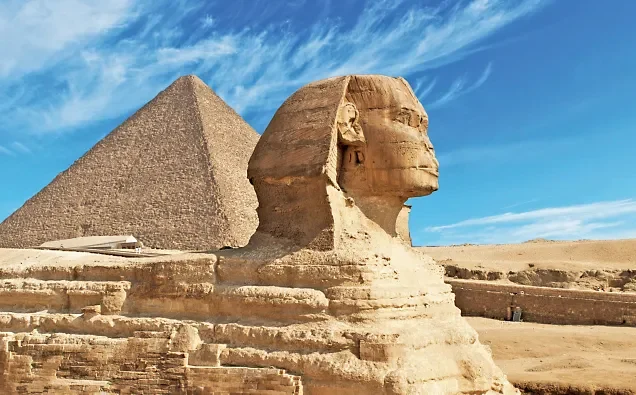
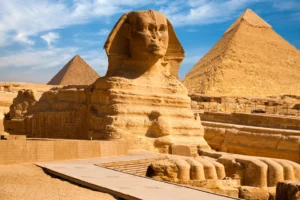
Morning: Today features the Giza Plateau, home of Egypt’s signature attractions: the Pyramids of Giza. The largest of these three structures is the Great Pyramid of Khufu, probably built more than 2,600 years before the time of Christ. Standing 480 feet tall, this pyramid is the last of the Seven Wonders of the Ancient World that still stands. Of course, we'll also see the inscrutable and mysterious Sphinx, carved almost entirely from one piece of limestone. When Napoleon first set eyes on the monument, it was still covered in sand up to its neck. Today it has been excavated, revealing the paws of a resting lion and chambers at its base. Take some time to revel in the history embedded in every block of stone and in the incomprehensible size of each structure standing tall in the desert sand.
Lunch: At a local restaurant.
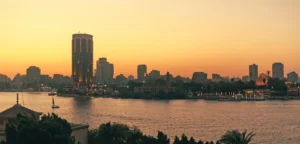
Afternoon: The rest of the day is at your leisure. You may choose to relax at our hotel or walk around Cairo. Perhaps you'll opt for a stroll along the Kasr el Nil Bridge to Gezira Island. The bridge offers fines views of the Nile, and is a popular local hangout as the day winds down.
Dinner: On your own—ask your Trip Experience Leader for local restaurant recommendations. You may want to sample some of Cairo's famous street food. Ful is one of the country's most popular dishes and, while traditionally served at breakfast, can be found nearly everywhere. Comprised of slow-cooked fava beans with oil and salt, it is quintessential Egyptian comfort food.
Evening: You have the freedom to spend the rest of your evening as you wish. Perhaps you'll choose to ascend to the top of Cairo Tower for a glimpse of the Pyramids as the sun sets.
Breakfast: At the hotel.
Morning: Today's discoveries feature Old Cairo (also referred to as “Historic Cairo” and “Islamic Cairo”). Officially founded in AD 969, this section of the city characterized by its far-reaching history; no matter which direction you glance in, you’ll be met by preserved remnants of cities long gone including Fustat, al-Askar, and al-Qatta’i. Observe the bustling locals, winding roads, and shops and houses mixed together creating a colorful scene.
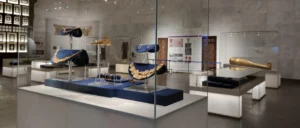
We'll start off at the National Museum of Egyptian Civilization. Your Trip Experience leader will guide you through the halls of cultural artifacts, ancient treasures, and even though the Mummies Hall, where Egyptian kings and queens of old can be viewed, preserved for all time in elaborate rituals. You can see artifacts here from the predynastic age, more than 5,000 years ago, to the Ottoman rule of Egypt into the 19th century, showing you the true scope of Egypt's past.
Then, we'll visit Coptic Old Cairo, which served as the Christian bastion of Egypt prior to Islamic rule. Here we’ll discover some of the oldest Christian churches in Egypt, including the Hanging Church, so named because it was built above a Roman fortress, and its nave is suspended over a passageway. We'll also explore the Church of St. Sergius where, according to the Holy Bible, Joseph, Mary, and baby Jesus stayed after their escape to Egypt from King Herod's wrath. These buildings date back to the third and fourth centuries.
Lunch: At a local restaurant.
Afternoon: Your afternoon is free to do last-minute shopping or pursue individual interests.
Dinner: We'll reconvene with our group and enjoy a Farewell Dinner at our hotel.
Evening: You have the freedom to spend the rest of your evening as you wish—ask your Trip Experience Leader for recommendations.
Breakfast: At the hotel.
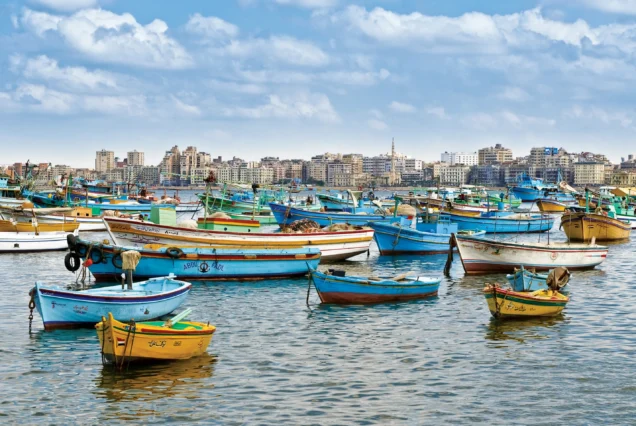
Morning: Transfer to the airport for your flight back to the U.S. Or begin your optional Alexandria: History & Romance post-trip extension.
Reviews
There are no reviews yet.